

Exploring Coorg’s Timeless Treasures: An In-Depth Guide to the Essential Destinations Coorg backpacking trip from Bangalore – BOOK NOW 
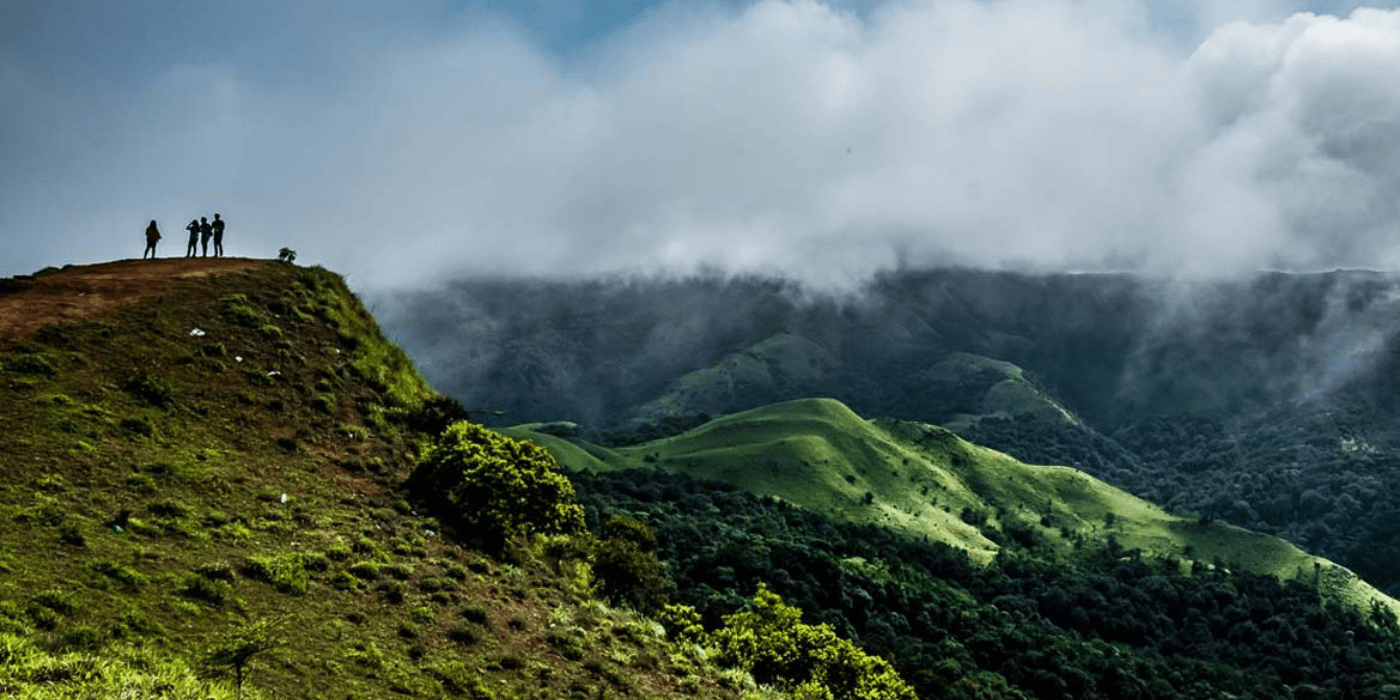
In the ceaseless cadence of Bangalore’s metropolitan life—where the symphony of vehicular horns intertwines with the glow of digital interfaces and the subtle aroma of roadside brews—there exists a profound yearning for landscapes that restore equilibrium to the spirit. Coorg, formally known as Kodagu, emerges as a paramount exemplar within Karnataka’s Western Ghats, a domain where veiled summits provoke introspection and the pervasive fragrance of coffee plantations evokes narratives of endurance and renewal. For the astute backpacker, a Coorg backpacking tour from Bangalore transcends transient recreation; it constitutes a deliberate foray into a terrain that amalgamates primordial geology with profound cultural strata, furnishing a restorative antithesis to urban exigency.
October manifests as the quintessential interlude for such an endeavor, its mild 10-25°C clime suffused with diaphanous mists that enshroud the estates in an almost otherworldly luminescence, while the residual vitality of the monsoon infuses the atmosphere with invigorating clarity. Should phrases such as “Coorg backpacking tour from Bangalore” or “2 day Coorg trip” have ensnared your nocturnal inquiries, you stand upon the precipice of an illuminating odyssey. This exposition functions as your erudite vade mecum, meticulously dissecting the itinerary’s cornerstone locales: the visceral magnetism of Dubare Elephant Camp, the sylvan enigmas of Nisargadhama, and the transcendent aura of Namdroling Monastery during the inaugural phase; the vehement torrents of Abbey Falls, the ecumenical holiness of Omkareshwara Temple, the archival weight of Madikeri Fort, and the expansive eloquence of Raja’s Seat in the subsequent segment. These are not incidental halts but vibrant tableaux encapsulating Coorg’s quintessence, each meriting exhaustive scrutiny for the erudition they bestow. Attune your faculties; the trajectory ahead promises enlightenment and invigoration.
The Perpetual Magnetism of Coorg: A Bastion of Ecological and Patrimonial Eminence
Coorg eclipses the archetype of a mere upland retreat, manifesting instead as a vibrant nexus of environmental magnificence and anthropogenic artistry. Sculpted across 150 million years within the forge of plate tectonic convulsions, this 4,000-square-kilometer dominion in the Western Ghats—a UNESCO-endorsed crucible of biological diversity—intercepts monsoon vapors in its sinuous contours, engendering the Cauvery River, whose sinuous trajectory nurtures a kaleidoscope of biomes. The Kodavas, the autochthonous denizens distinguished by their matrilineal mores and martial annals, have molded this expanse since antiquity, rebuffing aggressors from the Chola sovereigns of the 11th century to the Mysore potentates of the 18th. Their recalcitrance crested in the harrowing expulsions orchestrated by Tipu Sultan in 1785, occurrences whose reverberations persist in the edifices and ethnopoetics pervasive today, antecedent to the British subjugation in 1834, which heralded the inception of coffee husbandry—a bequest from a 17th-century peregrinator that presently mantles 30% of the topography in fragrant arabica canopies.
Nevertheless, Coorg’s captivation resides in its biotic exuberance, a province brimming with exceeding 300 ornithological variants, ranging from the sonorous utterances of the great hornbill to the reclusive glints of the Malabar trogon, concomitant with leopards that slink through the penumbral thickets and elephant phalanxes that incise peregrine routes across the woodlands. This profusion, albeit, equilibrates precariously amidst evolving pluvials—abbreviated by 15% since the 1980s, as per climatological dossiers—accentuating the imperative of judicious peregrination. For the backpacker, Coorg proffers an unrivaled tableau: Featherweight expeditions through arboreal mazes wherein chronicle intersects with the firmament, panoramas that evoke a subdued exultation over bygone hegemonies. Relative to the more manicured sojourns of Munnar or the conspicuous mercantilism of Ooty, Coorg exacts involvement, its venues not inert pageants but interactive colloquies with the terrain. Within the ambit of “best Coorg weekend getaways from Bangalore,” it posits as the paradigmatic amalgamation of venture and rumination, wherein footpaths elucidate obscured chronicles and cataracts cleanse the onus of quotidian toil.
The expedition initiates with a nocturnal egress from Bangalore, the metropolitan luminosities dissolving into the Ghats’ encompassing obscurity, consummating in an advent amid Madikeri’s colonial resonances—cobblestoned conduits shrouded in haze, the ambiance imbued with the terrene augury of plantations proliferating afar. A homestay on the margin of these cultivations furnishes a rooted sanctuary, its porticos delineating the nuanced meanders of eminences that appear to respire in consonance with the domain’s primordial cadence. From this outpost, the premier phase summons with locales that span the corporeal and the visionary, each a limen to Coorg’s manifold essence. The configuration assures a fluid succession, permitting epochs for unhurried esteem, pictorial documentation, and those fortuitous discourses that enrich the gregarious ethos of ensemble voyage. This initial immersion sets the tone for a sojourn that balances exertion with enlightenment, where each step through the mist unveils a new facet of Kodagu’s intricate identity, from the river’s rhythmic pulse to the mountain’s meditative hush.
The journey’s opening revelations commence with a profound engagement with Coorg’s faunal sentinels, a site where the river’s rhythm intersects with the land’s largest inhabitants in a display of natural sovereignty, setting the stage for the day’s deepening discoveries.
Dubare Elephant Camp: Confluences with the Sentinels of the Cauvery 
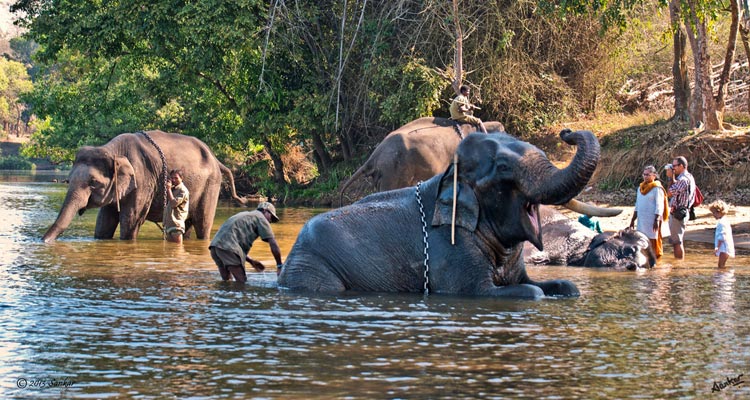
Dubare Elephant Camp materializes as the initiatory epiphany, a fluvial refuge wherein the Cauvery’s indolent flux encounters the colossal demeanor of Asia’s premier terrestrial mammals. Positioned along the stream’s satin meanders—this cardinal conduit of Kodagu, sustained by surpassing 320 affluents—this 300-acre preserve delineates its genesis to the locale’s silvicultural patrimony of the 1970s, transmuting from pragmatic felling bastions into a citadel of preservation amidst the Ghats’ contracting wilds. Herein, 150-200 Asiatic elephants perambulate in an approximation of their forebear realms, extricated from the hazards of braconnage and habitat infringement, their phalanxes erstwhile navigating uninterrupted passages from the Nilgiris to the Brahmagiris yet now hemmed by a 40% attrition of sylvan expanse since the advent of the 20th century.
To posture at Dubare is to confront the exalted: Immerse in the shallows wherein quartz-littered substrates concede beneath one’s tread, and behold trunks bowing in elegant vaults, hurling veils of liquid that ensnare the radiance akin to prisms of erstwhile precipitation. The mahouts, progeny of Kodava lineages tempered by millennia of custodianship, shepherd these 4-ton vigils with a lexicon interlaced from custom, their edicts reverberating contra the stream’s susurrus. Project Elephant, inaugurated in 1992, accentuates this locale’s function in fortifying these nomadic behemoths, whose infrasonic summons—profound oscillations propagating unto 10 kilometers through the nebula—function as celestial beckonings to remote consanguinity. The biotic weave proliferates yonder the proboscideans: Perilously imperiled mahseer ichthyoids dart via the vortices akin to argent apparitions, whilst smooth-coated otters initiate opportunistic forays from sedge-bordered levees, their frolicsome affrays a foil to the elephants’ solemnity. Expedition upstream along teak-enshrouded conduits, wherein impressions depress the mire akin to hieroglyphs of transit, and the subcanopy agitates with the subdued peril of leopards, their mimetic silhouettes a corroboration of Coorg’s umbral profusion.
For the backpacker attuned to the domain’s chronicles, Dubare transcends scrutiny, transfiguring into a haptic colloquy. It elucidates the tenuous covenant betwixt anthropogenic aspiration and innate hegemony, wherein coffee demesnes impinge yet the stream endures as a vital vein. In a province grappling with 50 perennial human-elephant altercations, this encampment cultivates empathy via contiguity, permitting one to delineate the coarse textures of an elephant’s dermis or discern the resonant oscillation of their stride—a momentous reminiscence that Coorg’s feral nucleus throbs not in seclusion, but in elaborate interreliance. This rendezvous endures as the diurnal’s basal impress, attuning the faculties for the more nuanced seductions forthcoming, wherein the stream’s clamor yields to the susurration of fronds and the hush of supplication. The camp’s role in broader conservation efforts, including anti-poaching collaborations with forest departments, further elevates it as a site of contemporary relevance, where visitors can witness the ongoing struggle to preserve the Ghats’ megafauna against encroaching modernity, the river’s flow a constant reminder of the delicate dance between human presence and natural primacy.
As the day progresses, the itinerary shifts to a more introspective interlude, where the river’s roar softens into the rustle of leaves, inviting a deeper communion with Coorg’s verdant heart, a transition that mirrors the land’s own rhythm of intensity and repose.
Nisargadhama: The Verdant Labyrinth of Bamboo and Riverine Reverie 
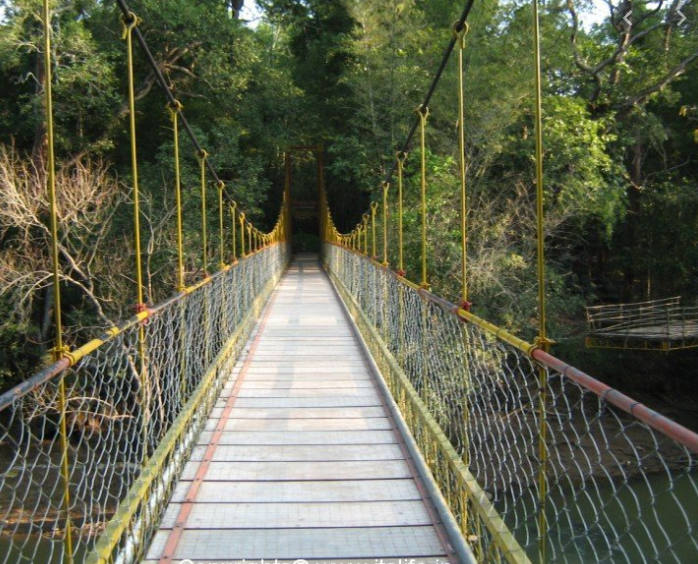
A succinct transit over a oscillating cordon bridge—200 meters of tenacious bamboo and ferrous alloy suspended supra the Cauvery’s meditative flux—ushers one into Nisargadhama, a 64-hectare isle contrived in 1986 as a rampart contra the depredations of inundation that erstwhile appropriated 20% of the contiguous vale’s tillable tracts. Enveloped in towering coppices of Dendrocalamus strictus, whose culms ascend 20-30 meters in a verdant vault, this bio-refuge incarnates Coorg’s doctrine of restitution, its rhizomic lattice apprehending erosion at an astounding 50 tons per hectare per annum—a pivotal bulwark in the Ghats’ susceptible laterite substrates inclined to liquefaction. The conduits meander akin to venation through this emerald basilica, solar rays splintering into effulgent beams that illuminate enclosures wherein spotted deer forage with vigilant grace and peafowl unroll tails in exhibitions of prismatic magnificence.
Nisargadhama’s enchantment inheres in its stratified biota: A purposeful arborization initiative amid Coorg’s colonial coffee bequest, it presently harbors a philharmonic of existence, from the gymnastic chases of paradise flycatchers appropriating arthropods mid-flight to the apocryphal prowess of racket-tailed drongos, whose vocal impostures disseminate adversaries in plumaged ploy. The perimeter capitulates to sacrosanct groves denominated devarakadu, inviolable sanctums wherein banyan radicles interlace akin to progenitor custodians, incarnating Kodava animism’s veneration for dendritic apparitions antedating Vedic ingressions. To perambulate by pedal—or, for the more venturesome, by leased velocipede through the friable sable loam—is to capitulate to the isle’s insidious allure: Culms crackle subpedalian akin to murmured machinations, gazebos materialize as occult oases wherein the stream’s cerulean convolutions disclose silt-impregnated arcana from upstream taluks. In October’s liminal lull, Mormon butterflies (Papilio polytes) choreograph aerial cotillions, their polymorphic pinions a cyclone of Darwinian draughtsmanship supra lantana lures.
This insular interlude enchants the backpacker pursuing abatement from vehement exertion, tendering a ruminative equipoise to Dubare’s dynamism. It exemplifies Coorg’s aptitude for regeneration, wherein anthropogenic interposition has engendered a haven that throbs with ornithological and arboreal vigor, admonishing sojourners that the Ghats’ pulchritude resides as profoundly in tacit restitution as in grandiose gesticulations. Nisargadhama beckons prolongation, its bamboo ligature a lenient thralldom that nurtures contemplation, transmuting a prosaic transit into a meditation on fortitude and the elaborate interlace of vitality in Kodagu’s clasp. The island’s role in local ecology extends to its function as a flood buffer, its bamboo barriers not only stabilizing soil but also supporting a micro-ecosystem that serves as a model for sustainable land management in the region, where deforestation pressures continue to challenge the balance between agriculture and wilderness, the hanging bridge itself a symbol of human ingenuity harmonizing with nature’s flow.
As the afternoon wanes, the itinerary elevates to a spiritual summit, where the whispers of the forest yield to the chants of a displaced tradition finding new roots in Coorg’s soil, a shift from the earthly to the ethereal that deepens the day’s philosophical undercurrents.
Namdroling Monastery: The Golden Sanctuary of Exile and Enlightenment 
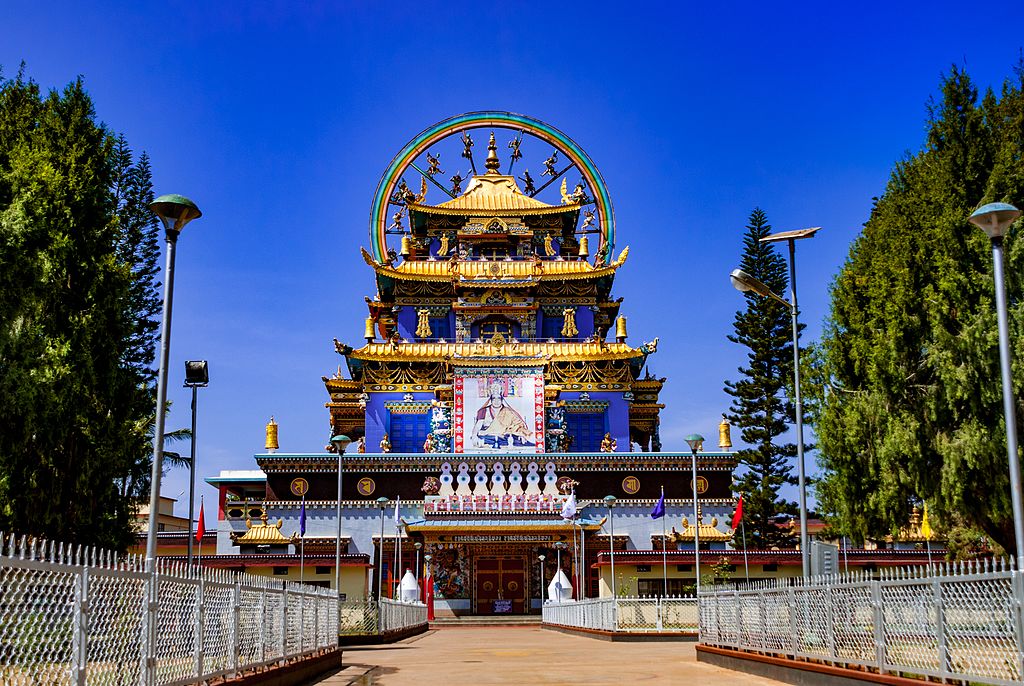
The diurnal’s trajectory elevates to Namdroling Monastery, venerated as the Golden Temple, a 20-acre enclave forged in 1963 from the cinders of the 1959 Tibetan insurgency—a modest bamboo hovel augmented under Penor Rinpoche’s prescient aegis into the Nyingma sect’s worldwide citadel. Herein, 5,000 monastic existences coalesce in a weave of scarlet vestments and sonorous incantations, prayer wheels gyrating sutras akin to perpetual adjurations amid the subdued drone of “Om Mani Padme Hum.” At the nucleus reposes the triad of gargantuan bronze effigies—Shakyamuni, Padmasambhava, and Amitabha—each 18 meters in stature, the third-most prodigious of their ilk globally, their verdigris vestures emanating an ethos of inexorable equipoise that perforates the psyche.
Namdroling’s chronicle is one of sublime banishment: 10,000 insurgents, eluding Chinese suzerainty, discovered asylum in Bylakuppe—the subcontinent’s penultimate Tibetan enclave succeeding Dharamshala—metamorphosing Coorg’s nebulous inclines into a “Little Lhasa.” Photovoltaic phalanxes presently energize scriptoria that propagate 100,000 sutra codices annually, whilst botanical bowers amalgamate rhododendron restoratives with Kodava phytomedicines in a matrilineal confluence of lore. The pagodas, aureated in 24-karat opulence, amalgamate Tibetan bulbous cupolas with indigenous gneiss in edificial ecumenism, the Padmasambhava Vihara hallowed in 1999 beneath the Dalai Lama’s scrutiny. Sensorial submergence transpires in ghee-lamp niches, wherein clarified butter blazes project capering umbras, and disputation enclosures scintillate with dialectical dynamism—palms impacting akin to tempests in quest of verity.
For the backpacker, Namdroling constitutes a transcendent fulcrum, an imperative visitation for its amalgamation of metaphysical profundity and ethnical perpetuation. Perambulate the corridors wherein thangka tableaux delineate karmic carousels in resplendent mineral pigments, or plumb the repository’s palm-leaf tomes salvaged from Sera Je, their tantric schemata interlacing with Kodava mandalas in banishment’s perpetual inscription. Puthari harvest ceremonials reverberate Losar rejuvenations in mutual dame-line deference, accentuating Coorg’s function as a nexus of dispersals. This aureate visceral impact—tropical Potala wherein juniper capitulates to ylang-ylang—erodes internal discord, proffering incantations that alchemize disquietude into quiescence. In Kodagu’s battle-scarred pleats, Namdroling erects as fortitude incarnate, a karmic riposte that exalts the backpacker’s trajectory from corporeal to metaphysical, bequeathing an ineffaceable embossment of illumination amidst the demesnes. The monastery’s self-sustaining ethos, from solar-powered presses to herbal integrations, highlights its role as a model of adaptive resilience, where exile has not diminished but diversified the cultural fabric of Coorg, inviting visitors to ponder the universal themes of displacement and renewal, the golden spires a beacon of hope amid the hills’ eternal vigil.
The vespertine reclusion in the homestay elicits contemplation: A crepuscular perambulation through plantation phantasms, wherein lanterns perforate maze-like radicles and luciferin luminaries scintillate akin to ephemeral exegeses. This initiatory diurnal’s 100-kilometer circuit—from fluvial vigils to insular intimacies and aureate graces—delineates Coorg’s innate locus, attuning the essence for the subsequent diurnal’s declivities. The homestay, with its unpretentious yet veritable Kodava configuration, evolves into a microcosm of the locale’s cordiality, its barriers resounding the diurnal disclosures as the eminences subside into obscurity, the day’s explorations lingering like the scent of incense in the air, a subtle promise of the revelations yet to come.
The Culminating Phase: From Cascades to Citadels – Coorg’s Resonant Reckoning
The ensuing diurnal auroras with a sentiment of consummation, the indigenous elixirs anchoring the physique as the psyche anticipates the domain’s terminal epiphanies. From the homestay’s demesne-flanked vantage, the itinerary veers to Coorg’s aqueous and archival arteries, consummating in panoramas that authenticate the pilgrimage with sublime serenity. This succession—from cataclysmic cataracts to sacrosanct schists, bastioned bequests, and sublime swards—encapsulates the tour’s thematic helix, melding the kinetic with the contemplative in a valediction that reverberates protractedly post-return. The progression allows for a gradual build, from the sensory overload of water’s wrath to the quiet dignity of stone and the expansive hush of height, ensuring a holistic harvest of Coorg’s offerings, where each locale builds upon the previous to create a narrative arc of discovery, from the elemental to the eternal.
A midday hiatus for nutriment at a provincial precinct permits the ensemble to revitalize, relishing the nuanced interplay of aromatics and freshness that delineates Coorg’s epicurean ethos, ere impelling onward to the postmeridian’s archival nucleus, where the land’s layered legacies come into sharp relief, the journey’s momentum shifting from the wild to the wrought.
Abbey Falls: The Symphonic Surge of Cascading Power 

A declivity of 20 kilometers leads to Abbey Falls, wherein the Abbey River—an affluent excavating via 500 square kilometers of catchment—plunges 70 feet supra a basalt escarpment, its Pleistocene-carved crevices exhaling a nebula that mantles the gorge in perpetual prosody. Generated from montane fontanelles coalescing in Kaveri’s incipient ire, this cataract thunders through a forested clasp, its effluvium engendering prismatic arcs in the splintered luminescence of pendant areca fronds. The accession—a stair-sculpted conduit amid the plumed phalanx—delivers to a dais wherein the deluge’s bass undulation subdues all save the cardiac pulsation, bulwarks guaranteeing veneration from afar as 10-knot vortices agitate spume for downstream denizens.
Abbey’s geologic grandeur detonates in erosive elegance: Currents carve charnockite precipices millimeter by inexorable millimeter, baring quartz-veined chasms that convulse with the Ghats’ primordial perturbation. Tree ferns (Cyathea dregei) enwrap the levees in Jurassic recalcitrance, their fronds a vestige of primordial persistence, whilst wild turmeric radicles exude saffron contra the alabaster’s adamant rite. In October’s modulated maelstrom—tempered by upstream barrages yet defiant contra pluvials’ 15% contraction—the basin’s exceeding 200 botanical cognates prosecute floral fray, a corroboration of Coorg’s fluvial fortitude. To assail the oriental flank at oblique irradiance unveils subverted caverns as echo sanctuaries, wherein invocations rebound in auditory alchemy, nebulae kneading the faculties into obeisance. Abbey incarnates hydraulic hegemony: A immersion of divinity that inundates the mundane, Kaveri’s overture proclaiming fluvial dominion in Kodagu’s verdant vault—a sine qua non for backpackers pursuing the exalted in nature’s inexorable orchestration. The falls’ perpetual propulsion, a philharmonic of effluvium and escarpment, functions as a metaphor for Coorg’s perennial vigor, wherein aqueous vehemence both abrades and regenerates, akin to the backpacker’s odyssey of discernment and disengagement, its roar a reminder that in Coorg, even the waters tell tales of unyielding force and fragile grace, the mist rising like a veil between the visible and the veiled, inviting the traveler to pierce the surface and touch the timeless.
From the falls’ fervent flux, the conduit turns introspective, toward refuges wherein schist and spirit coalesce in tacit defiance of temporality, where the land’s sacred narratives unfold in stone-carved silence, the water’s wildness giving way to the stone’s steadfast whisper.
Omkareshwara Temple: The Syncretic Sanctum of Stone and Spirit 
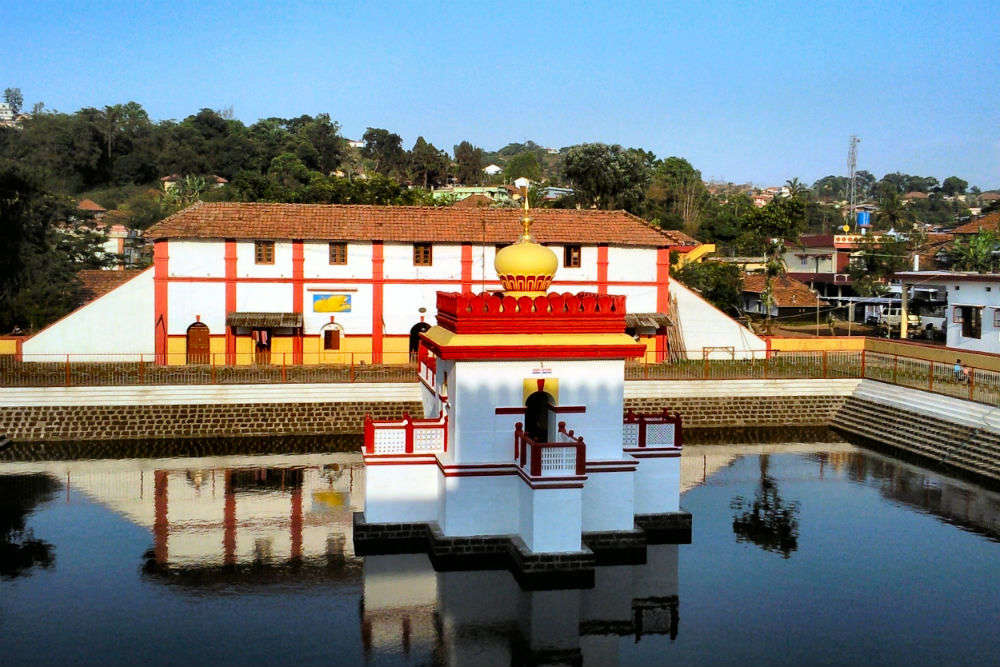
Rebounding to Madikeri’s nucleus, Omkareshwara Temple unfurls as a 1820 syncretic opus—Mughal minarets interlacing Shaivite spines in Indo-Saracenic splendor, Lingarajendra II’s riposte to Tipu’s 1785 expulsions (1,700 Kodavas consigned to thralldom, survivors sanctifying this hybrid haven with Gothic cupolas and Kerala pediments). The hallowed cistern, fontanelle-fostered, swarms with crimson cyprinids as oracular envoys—bestow oblations, behold their surges as Puranic prognostications, the lingam (excavated from Kashi’s fossil strata) anchoring the rite. Bare-pedal perambulations encircle Persianate vaults inscribed with Sanskrit, friezes fusing arabesques and tridents in Tipu’s schema’s recalcitrant resonance.
The animus’s adamant abides: Fetters-forged stigmata slabbed in Kannada-Arabic decrees of 1813, cyprinid contingents (Catla kin) symbolizing spoils recouped from penury. Liturgies interweave Sufi strains with Tamil tides, conchs cleaving quiescence into crescendos—attire as aegises of amenity, the abyss’s gyre mirroring hegemonies in undulation-undoing. Omkareshwara is the doctrine’s forge: Despots’ delineations transfigured to talismans, Coorg’s ire infixed in schist—Lingarajendra’s expiation edifice appeasing phantasmal Brahmin ichor, Shiva’s insignia ionizing incubi into immanence. For the backpacker, it is a ruminative keystone, its marmoreal muteness a haven for historical harmonies, transmuting transit into trek amid Madikeri’s nebulous nexus. The temple’s ecumenism—Islamic geometry capitulating to Hindu iconology—mirrors Coorg’s innate hybridity, wherein subjugations engendered not schism but steadfast colloquies, inviting rumination on tenacity contra tribulation, its sacred pond a still mirror reflecting the turbulent history of a land that bends but never breaks, the carp’s sudden leaps a symbol of life’s unpredictable grace amid the stone’s steadfast silence.
The temple’s tranquil timbre transitions fluidly to the fort’s fortified fortitude, wherein the domain’s martial reminiscence manifests in masonry and memento, where the echoes of battles past resonate in the very stones underfoot, the spiritual serenity yielding to the structural solidity of history’s heavy hand.
Madikeri Fort and Museum: Bastions of Bygone Battles and Enduring Echoes 
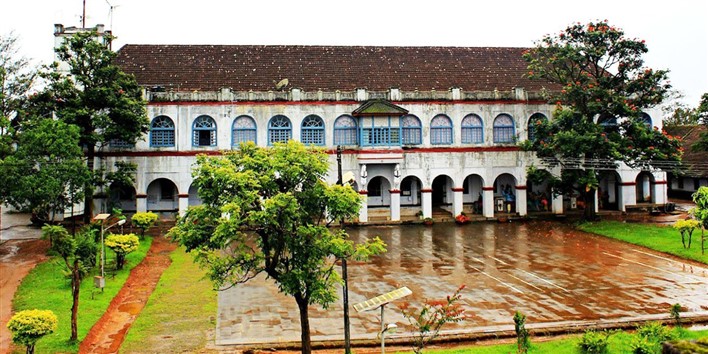
The parapets of Madikeri Fort summon a siege of sagas—mud-forged by Muddu Raja in the 1600s’ latter tumult, granite-gutted through Tipu’s 1781 Jaffarabad jest and Linga Rajendra’s 1812-14 reclamation, British battering in 1834’s denouement. Ramparts rise to ravage townscapes—steeple thrusts transfixing estate expanses, the grudge-grotto’s core where Mudduraja’s mud-mound mutated via Tipu’s tiger-traps to Doddavira Rajendra’s 1790 retort. The museum’s murk unleashes venom: Peeda pistols silver-sheathed from Mysore massacres, Huthri lamps bronze-blazing harvest infernos, Chikkaviramma’s 1820 regent glare—coven cunning confronting the Raj in sepia severity.
Bastion’s blaze brands: 1834 treaty’s territorial theft (1,000 square miles seized), birthing the 1837 Memorial’s self-rule lament, howls haunting autonomy anthems. Dame-dynasty dirks dominate—heiress heirlooms, bridal blades blood-brothered in matrilineal muscle; moat’s spectral lotuses lured bees buzzing 70% of cherry yields as pollinator patriots. Interrogate the interpreter on epic eruptions—Kariyappa’s Tipu-tiger triumphs transmuting trove to testament under Karnataka’s archaeological aegis, St. Mark’s 1859 East India erection (Madras Diocese specter) now relic-riddled with Raj relics and Kodava keepsakes, Field Marshal K.M. Cariappa’s countenance commanding the cache. Kote Maha Ganapathi shrine spars in Dasara’s divine derby, prison’s ferrous murmurs memorializing empire’s eclipse. Madikeri manifests bulwark’s brutality: Masonry mocking massacres, murmuring “unyielding” in every fissure—fort’s flayed facets a flayed chronicle of Kodagu’s indomitable ink, where the museum’s artifacts—silver-inlaid rifles, bronze diyas, sepia portraits—serve as sentinels of a society where women inherited not just land but legacies of leadership, the fort’s ramparts rising as enduring emblems of resistance, their weathered stones whispering of sieges survived and sovereignty reclaimed, the panoramic views from the walls a window to the valleys that witnessed those very struggles.
The fort’s fortified finality flows toward the day’s denouement, where elevation elevates the experience to epiphany, a perch from which the entire tapestry of the journey comes into harmonious view, the historical weight lifting into the light of the landscape.
Raja’s Seat: The Perched Poetry of Panoramic Parting 

Crescendo crests at Raja’s Seat—Kodava sovereigns’ vesper vigil, terraced swards surging to a 1,000-foot fatal fringe where coffee cataclysms convulse in chlorophyll convulsions, erstwhile the Rajas’ dusk devotion amid valley vigils and solstice-staked stargazes. Toy tracks trundle through tended tumult, jets jettisoning gloaming geysers; corrugations collide with Tamil twilight twilight, ridges resounding Ramayana refrains (Rama’s respite reverie) and Tipu turret testimonies. Gandhi Mantap moors the momentum—1934 Bapu’s oration ossified in Sarvodaya Diwas dirges (January 30 martyrdom march, Gita-Koran-Bible verses vortexing the vacuum).
Lunge’s laceration lashes luminous: Progenitor planetary pursuits pegged Sirius for sowing sacraments in pre-lens logic; October’s ochre omens incinerate bluffs like berserker bonfires, whistling thrushes (Myiophoneus caeruleus) throating twilight threnodies from threshold thresholds in cobalt comets. Assault as umbras unspool—vales vein vampiric, plantations platting in plot-points of emerald erudition. Raja’s rends the rupture-rend: Horizon-hewn infinity jaw-jolting to dust, Kodagu’s knockout caress where crowned courtiers cajoled crepuscules, now your codex for conquest consummated—a perch where the day’s dissonances dissolve, leaving only the land’s lingering lyric, the views a vast canvas of mist-laden valleys and rolling ridges that encapsulate Coorg’s boundless beauty, the gardens’ manicured lines contrasting the wild undulations below in a final, harmonious tableau, the sunset’s slow descent a poignant punctuation to the journey’s crescendo, where the backpacker’s reflections on the river’s roar, the bamboo’s bind, the monastery’s mantra, the falls’ fury, the temple’s tranquility, and the fort’s fortitude converge in a moment of profound synthesis.
The 80-kilometer Ghats’ graceful unraveling ratifies the raw requiem—return to Bangalore’s babel, but branded by the blaze indelible, the tour’s tapestry a testament to Coorg’s captivating confluence, where each destination has etched its indelible mark upon the traveler’s tapestry of experiences, from the river’s roar to the ridge’s hush, leaving a legacy of wonder that beckons beyond the horizon, the Ghats’ gnash a gentle goodbye, their glories gorging the soul for seasons to come.
The Backpacker’s Codex: Essential Preparations for Coorg’s Embrace
To navigate Coorg’s contours with confidence, the backpacker must curate a compact arsenal, confined to a 20-30 liter vessel that honors mobility’s mandate. Apparel demands versatility: Moisture-wicking fabrics for the damp descents (two to three ensembles suffice), elongated garments for sites of sanctity, and insulating layers against the nocturnal chill that descends with the hills’ hush. Footwear follows suit: Robust soles for treacherous inclines, supple alternatives for transitional traverses.
Protective provisions form the vanguard: Impervious coverings against capricious cascades, ultraviolet barriers for elevated exposures. Vital elixirs encompass remedies for transit tribulations and sensitivities, rudimentary restoratives for abrasions and contortions, and repellents for the insectile interlopers that patrol the peripheries. Sundries sustain the sojourn: Portable luminaries for signal-scarce sectors, pre-loaded cartographies for connectivity’s caprice, refillable receptacles for hydration’s imperative, modest monetary reserves (digital deference varies in the vales), and identification imperatives. For companionship, ergonomic carriers for the young and stabilizing supports for the seasoned ensure equitable engagement.
Dispense with encumbrances: Voluminous vestiges, fragile finery, and contraventions of custom. Nourishment navigates naturally: Staple grains and spice-infused yields from regional roots, imbibed with discernment—streams scrutinized for sanctity. Collective dynamics demand dexterity: Ensembles of 12 to 48 engender emergent alliances, stewards sparking synergies at sanctums; demographics diversify, resonances resonant.
Obstacles obviated: Curvatures countered by prophylactics, nebulosities neutralized by nimbuses, multitudes mitigated by seasonality’s mercy (October’s attenuated attendance), exertions equilibrated for equitable access, linkages latched locally. Ecological edict: Footfalls fleeting, detritus dispatched, interactions invigorated with indigenous intellect.
Divergences discerned: Tripartite traversals temper tenacity; opulent odysseys omit authenticity; solitary sojourns sovereign solitude; this collective catalyzes communion. Thematic tangents—faunal forays, patrimonial probes—diverge delightfully; this synthesis savors the spectrum, Coorg’s chromatic chronicle condensed to conquest. Such preparations transform the backpacker from visitor to voyager, equipped not merely for the terrain but for the transformative encounters that define Coorg’s embrace, ensuring that the journey’s physical demands harmonize with its intellectual and emotional rewards, from the elephant’s resonant step to the temple’s silent stone, each element contributing to a holistic narrative of discovery that lingers long after the last hill fades from view.
Queries Quelled: Illuminating Coorg’s Common Conundrums
Familial feasibility? Affirmative beyond infancy; vigilance vital at vertiginous venues. Vicissitudes? Consult theunitedtrips.com compendium for contingencies. Augmentations? Avocations adjacent allure. Vigilance viral? Veils vehicular; verify vogue. Solitary sanctuary? Syndicates safeguard seamlessly.
These inquiries, common among prospective participants, underscore the tour’s accessibility and adaptability, ensuring that Coorg’s wonders remain within reach for diverse seekers. Whether embarking alone or in company, the backpacking tour from Bangalore facilitates a journey tailored to individual rhythms, fostering personal growth amid collective discovery, where the land’s diverse destinations—each a chapter in Kodagu’s grand chronicle—become shared touchstones for reflection and renewal, the backpacker’s pack not just a container but a conduit for the stories they will carry home.
The Coorg Backpacking Tour: A Timeless Invitation to Transformation
The Coorg backpacking tour from Bangalore culminates not in closure but in commencement—a catalyst for continued curiosity in the world’s wild places. From Dubare’s guardianship to Raja’s panoramic parting, each destination distills Kodagu’s quintessence: A land where rivers recount resilience, forests foster reflection, and stones speak of sovereignty. This 2-day odyssey, with its 250-kilometer traverse through the Ghats’ grand theater, leaves the traveler not depleted but invigorated, armed with memories that outlast the miles.
For those compelled by “Coorg weekend getaways from Bangalore,” this itinerary stands as a blueprint for balanced bliss—adventure tempered by tranquility, history harmonized with habitat. As the hills recede in the rearview, the mist’s memory lingers, a silent summons to return. Explore the full details and secure your place at theunitedtrips.com/tour/coorg-backpacking-tour/—the Ghats await your next chapter.
Which Coorg enigma captivates you most—Dubare’s depths or Namdroling’s light? Share in the comments; let us weave your wanderlust together.