

Capturing the Beauty of Savandurga Lake: A Photography Guide to the Best Spots and Techniques 
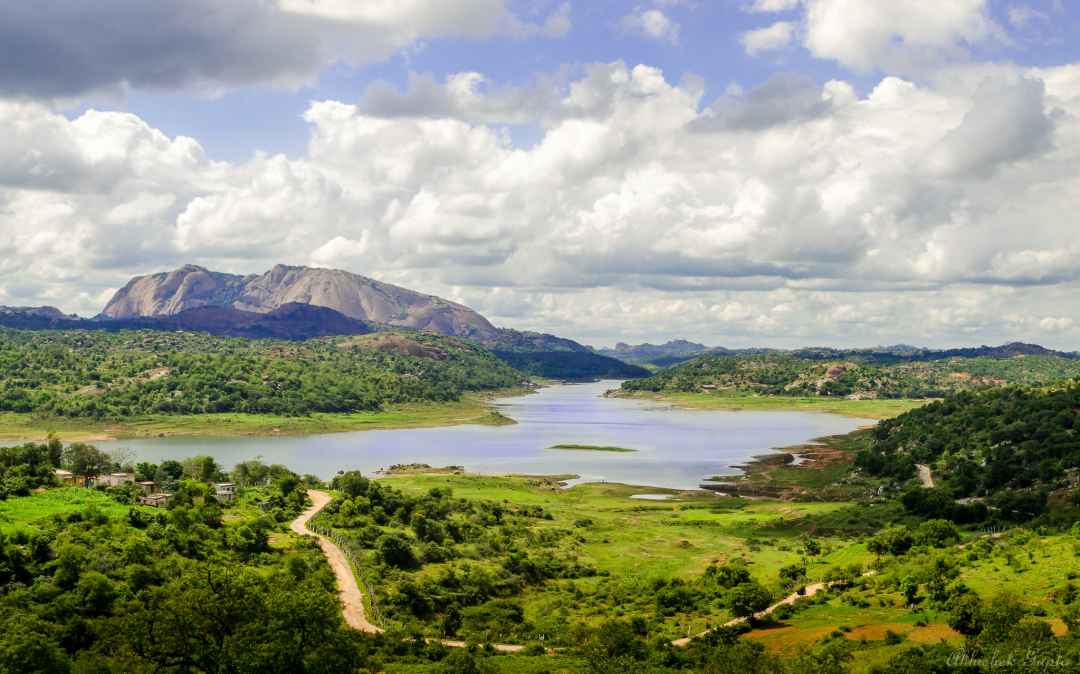
There are some places that don’t just exist to be visited — they are meant to be felt, framed, and remembered. Savandurga Lake, resting quietly beneath one of Asia’s largest monoliths, is one such destination. Tucked about 60 km from Bangalore, this hidden gem is a dream for photographers, trekkers, and anyone who finds beauty in nature’s stillness.
Whether you’re chasing the perfect reflection shot of the monolith mirrored in calm waters, or trying to capture the soft golden light dancing across the rocky terrain, Savandurga Lake offers moments that turn into timeless frames. In this guide, we’ll explore everything you need to know — from how to reach this tranquil escape to the best techniques for photographing it like a pro.
1. Introducing Savandurga: Karnataka’s Natural Canvas 

The Savandurga region is where serenity meets strength. The towering granite hill — split into Karigudda (the black hill) and Biligudda (the white hill) — forms a stunning backdrop for the lake below. The reflections, colors, and textures here change dramatically with the time of day, making it a living canvas for photographers.
As dawn breaks, the first light paints soft hues over the still water. The mist rises gently, revealing the hill’s rugged contours, while birds glide across the surface, adding movement to the frame. By noon, the sunlight sharpens the contrast, turning the entire landscape into a vivid play of rock, sky, and reflection. And when evening comes, Savandurga Lake transforms once again — warm tones, long shadows, and mirror-like reflections create magic that’s impossible to ignore.
2. How to Reach Savandurga Lake 

Distance from Bangalore: 60 km (approx.)
Travel time: 1.5 to 2 hours
The best way to reach Savandurga Lake is by road. Start early from Bangalore — ideally by 4:30 or 5:00 AM — to catch the sunrise light. Drive through Magadi Road, passing small villages and scenic countryside until you reach the base area near Savandurga Hill. From there, it’s a short walk towards the lake.
There’s minimal signage, but locals are friendly and happy to guide you. Parking is available near the base of the hill, and from there, you can explore different viewpoints around the lake. The road trip itself is photogenic — lush green fields, rustic houses, and the distant silhouette of the monolith teasing you from the horizon.
3. Best Time to Visit Savandurga Lake

Timing is everything — especially for photography.
Best season: October to February (clear skies, pleasant temperatures)
Best time of day: Early morning (5:30 AM to 8:00 AM) and late evening (4:30 PM to 6:30 PM)
Avoid: Midday hours (harsh light) and monsoon peak (access can get tricky)
Morning light at Savandurga Lake has a soft pastel glow. The low mist often adds drama to landscape shots, and reflections are at their best before the wind picks up. Evenings are perfect for golden hour portraits, drone shots, and silhouette frames of the monolith.
Pro tip: Stay until just after sunset — the twilight gradient over the lake, shifting from orange to indigo, is breathtaking.
4. Photography Spots Around Savandurga Lake

a. The Reflection Point
This is the classic angle — the calm water perfectly mirroring the monolith. Reach this spot by walking towards the eastern bank just after sunrise. Use a wide-angle lens (10–20mm) to include the full expanse of rock and reflection.
b. The Rocky Ridge
Climb slightly up the rocky side to get a higher perspective. This spot gives you a panoramic view of the lake, the forests, and the surrounding villages — ideal for drone photography or long-lens compression shots.
c. The Temple Curve
Near the base, there’s a small shrine where the lake curves naturally. It’s a beautiful spot for symmetrical compositions — especially when you frame the temple in the foreground and the reflection behind it.
d. The Far Shore Viewpoint
Walk around the lake to find this lesser-known side. From here, you get the sun rising behind the hill — a completely different mood for your morning shots.
Each location offers a distinct mood and texture, so plan your angles depending on the light.
5. Techniques for Photographing Savandurga Lake

a. Play with Reflections
The lake’s glassy surface is its most striking feature. Position your camera low near the waterline to enhance the reflection symmetry. Use a tripod to keep your horizon straight and experiment with f/8 to f/11 for sharpness across the frame.
b. Use Natural Frames
The tree branches, rocks, or temple structures can serve as beautiful frames for your shots. This technique helps direct the viewer’s eye and adds depth to your composition.
c. Adjust to Light Conditions
During early morning, shoot with a slower shutter (1/60s or slower) to capture soft water ripples. As the light intensifies, increase shutter speed and use polarizing filters to reduce glare.
d. Capture the Textures
Savandurga’s granite surfaces and the surrounding greenery provide fascinating contrasts. Try converting some of your shots to black and white to highlight patterns and texture.
e. Go Beyond the Obvious
Instead of only focusing on the big landscape, zoom in on details — a reflection of a bird, the ripple pattern, or even footsteps near the water. These micro-moments often tell more powerful stories.
6. The Ideal Camera Gear for This Location

If you’re planning a dedicated photography trip, here’s a gear list that works perfectly at Savandurga Lake:
Wide-angle lens (10–20mm): For landscapes and reflections
Telephoto lens (70–200mm): To capture distant details or birds
Tripod: Essential for low-light and reflection shots
ND and Polarizing filters: Control glare and adjust exposure
Drone (optional): Ideal for overhead symmetry and the hill’s scale
Extra batteries & memory cards: Remote areas have no charging points
Remember — gear helps, but your patience and timing make the real difference. Wait for that perfect cloud or ripple, and your photo will speak volumes.
7. Things to Do Around Savandurga Lake 

Savandurga is more than just a photo stop — it’s a full-day escape into nature.
Trek to Savandurga Hill: If you’re up for it, the Biligudda trail leads to stunning panoramic views of the lake and nearby forests.
Visit Manchanabele Dam: Just a short drive away, this spot is another great location for water photography and sunset shots.
Explore Local Temples: Small shrines near the lake offer a glimpse into the area’s spiritual side — perfect for cultural photography.
Birdwatching: The lake area attracts species like kingfishers, cormorants, and eagles — an added bonus for wildlife photographers.
Picnic by the Lake: After a morning of photography, relax with packed breakfast or tea and enjoy the stillness before the crowds arrive.
8. Eco-Friendly Travel and Photography Tips

Responsible photography means respecting the environment that gives us such incredible visuals.
Avoid littering — carry your waste back.
Don’t disturb local wildlife for the sake of a shot.
Use reusable bottles and eco-friendly gear.
Minimize drone noise if other visitors or animals are nearby.
Support local vendors if you stop for snacks or tea.
Every small act of responsibility keeps this pristine location beautiful for future travelers and photographers.
9. The Magic Beyond the Lens 

What makes Savandurga Lake unforgettable isn’t just its beauty — it’s the feeling of standing there, camera in hand, surrounded by silence, watching the world awaken. It reminds you that photography is more than just technique; it’s emotion, timing, and presence.
The lake’s calmness reflects more than the hill — it mirrors your own stillness. Each visit, each frame, reveals something new. Some days it’s the color of the sky; other days it’s the way light touches the rock. That’s the kind of beauty that never fades.
10. Practical Tips Before You Go
Start Early: Leave Bangalore by 4:30 AM to reach by sunrise.
Carry Snacks & Water: No restaurants nearby early morning.
Dress Comfortably: Light clothes and good shoes for mild walking.
Stay Safe: Avoid stepping too close to the water edges — they can be slippery.
Check Weather: Mist and rain can alter visibility.
If you want to make the most of your visit, combine your lake photography with a short hike up Savandurga Hill — you’ll capture both the top-down and ground-level beauty of this landscape.
About The United Trips
This blog is brought to you by The United Trips, a Bangalore-based travel company passionate about curating authentic nature experiences across South India. From offbeat treks to scenic getaways, The United Trips connects explorers with the raw beauty of the outdoors — responsibly and meaningfully.